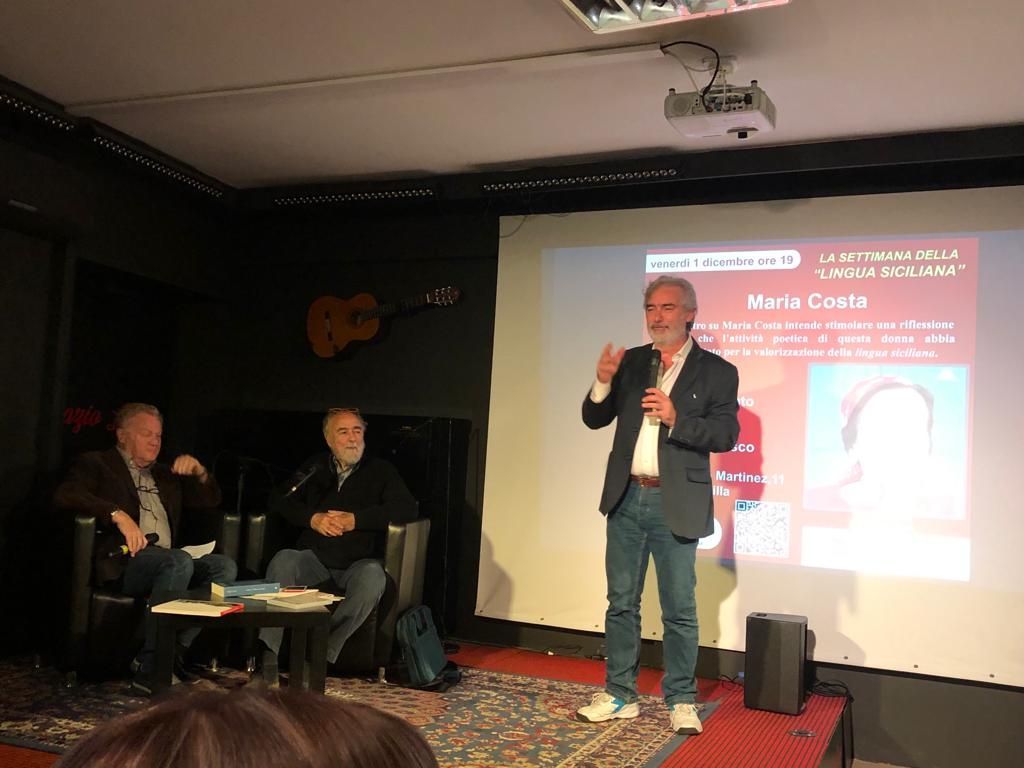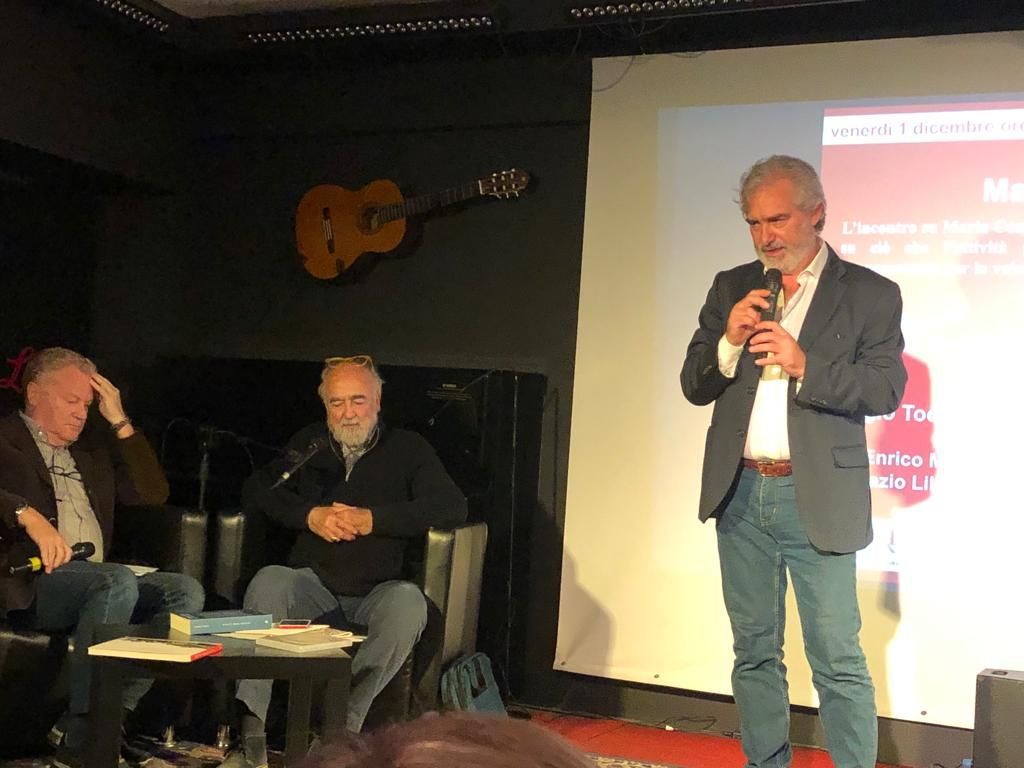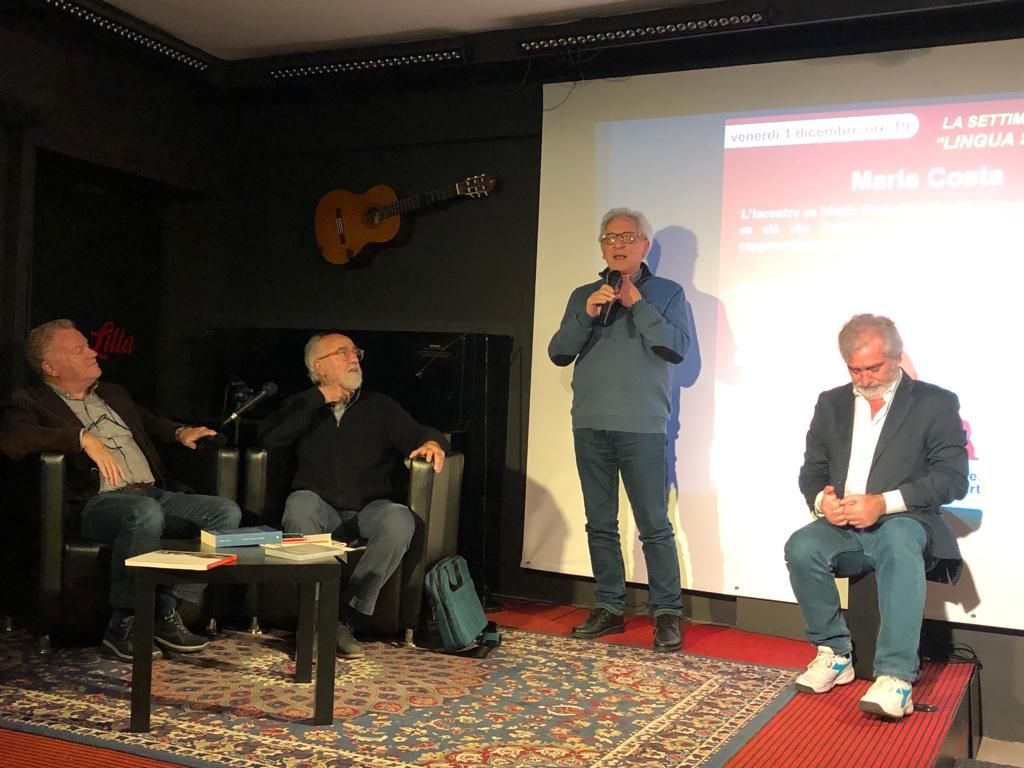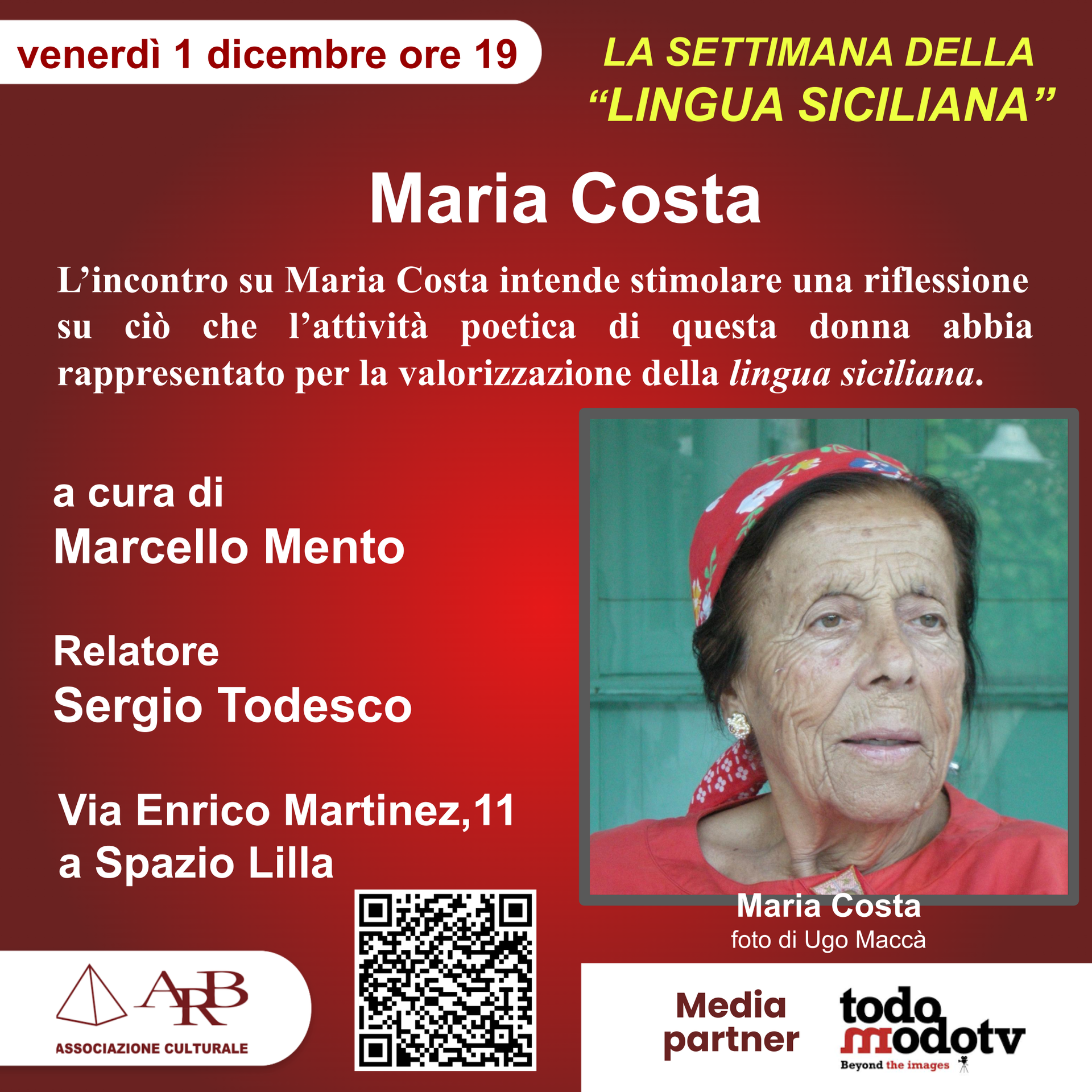
MARIA COSTA
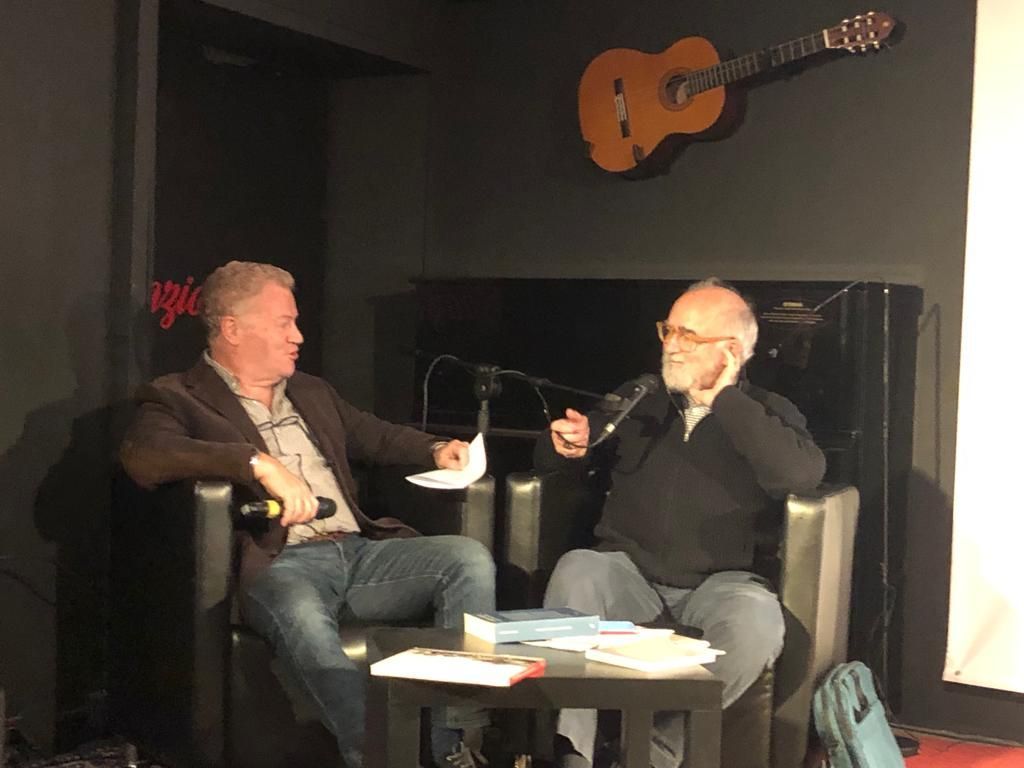
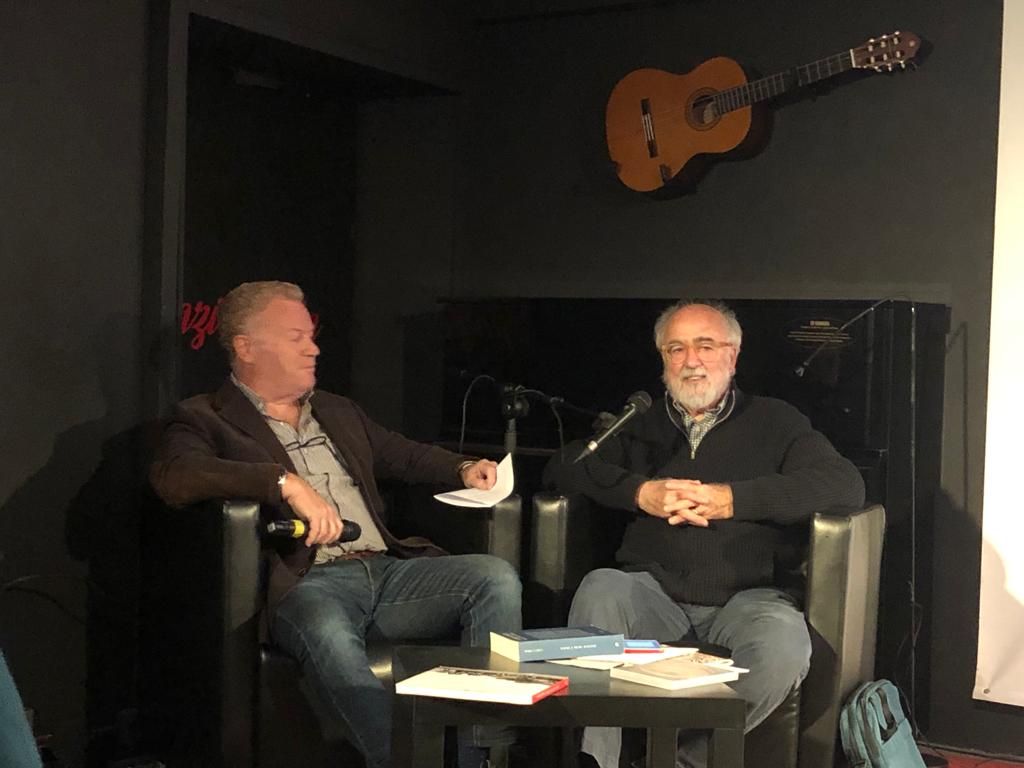
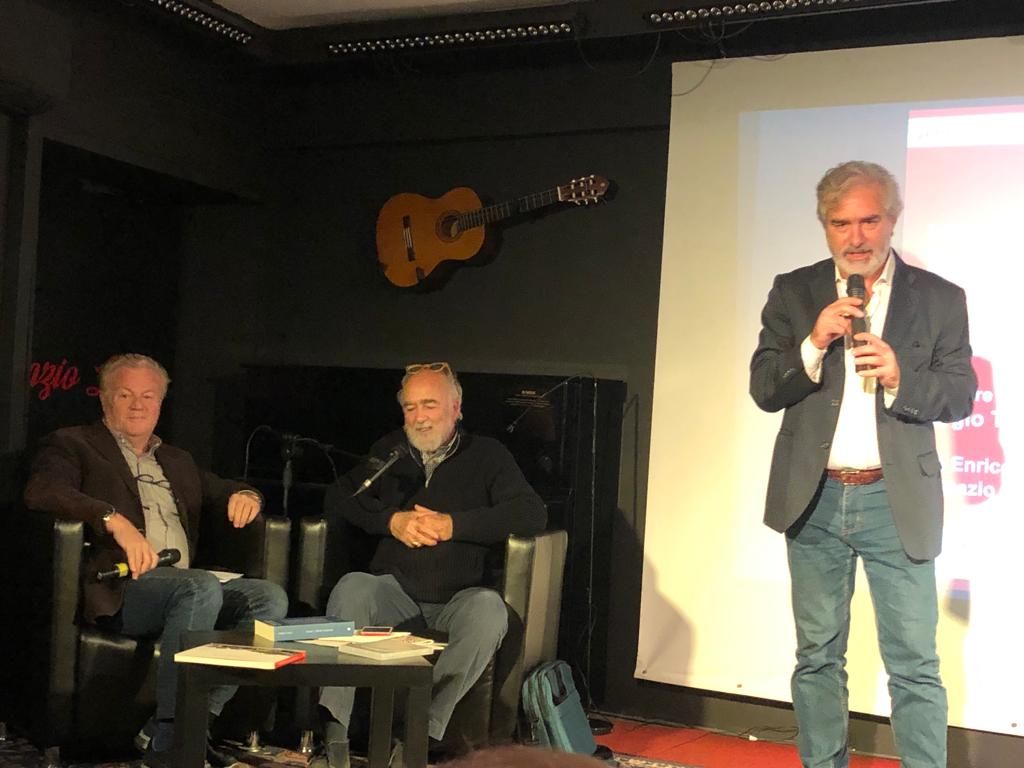
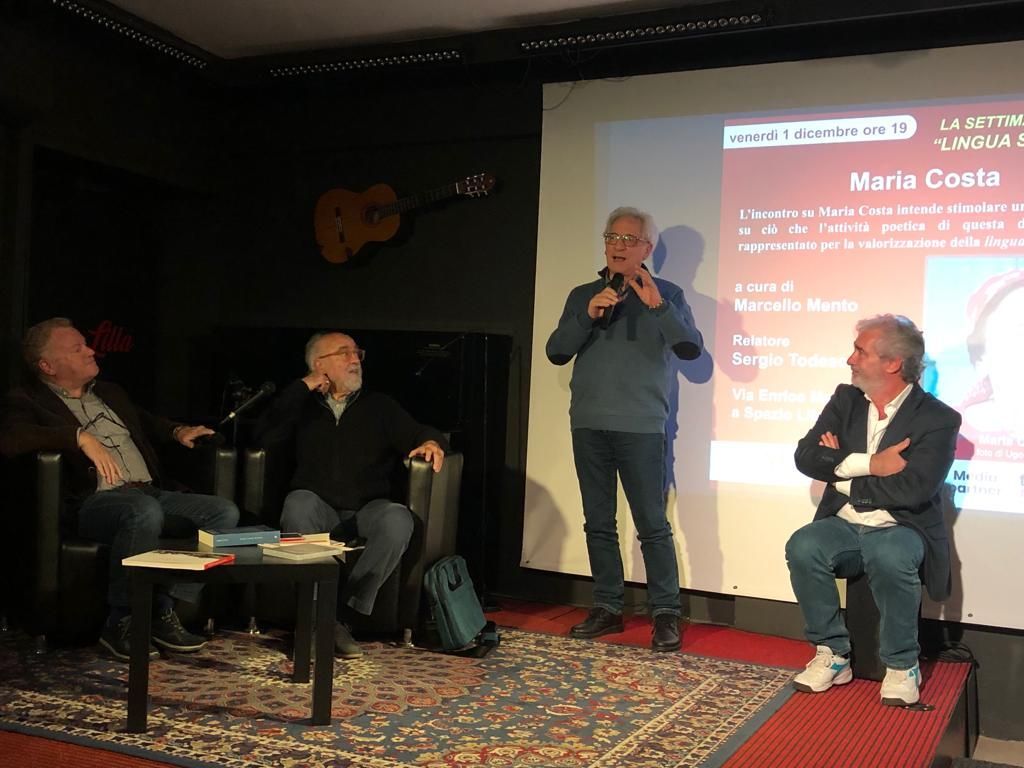
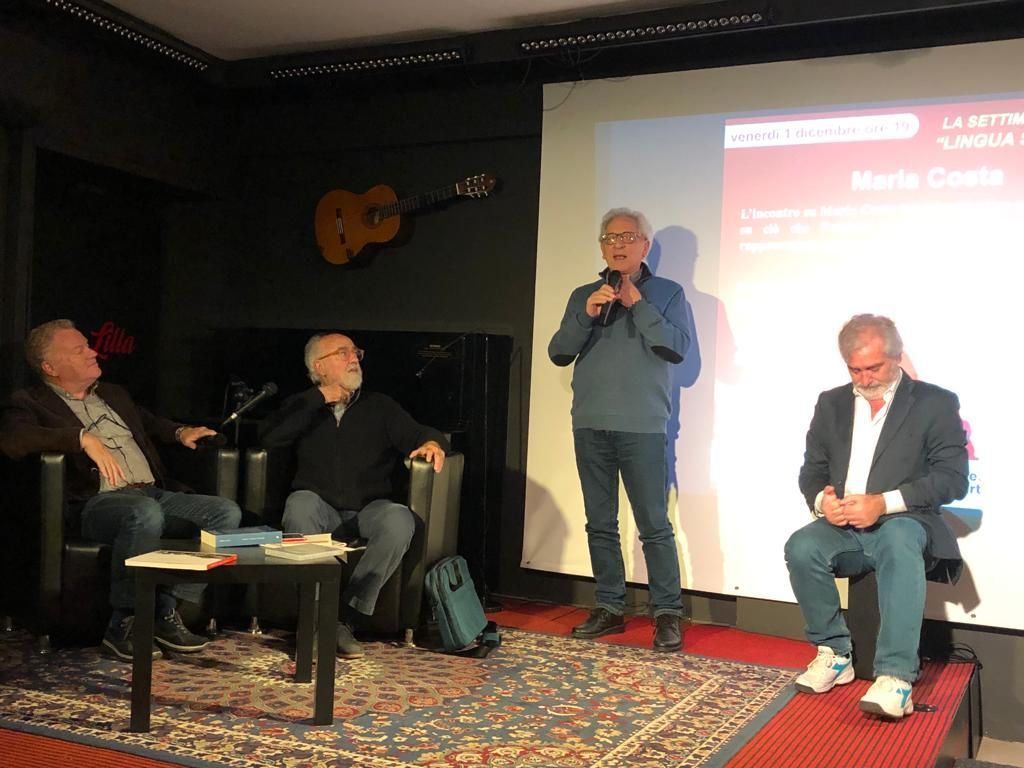
The lecture on Maria Costa aims to stimulate reflection on the significance of this woman's poetic work for the enhancement of the Sicilian language. Maria's choice of dialect in her extensive oeuvre stemmed from the need to present her own world to herself, first and foremost the seafaring world, but also that of the corner of the world where she was born and raised: post-earthquake Messina, whose linguistic heritage, still intact, Maria learned from her parents and the elders of the place where she lived and continued to live until her death. Sicilian allowed her a closeness to objects, people, professions, stories, and imagery that the Italian language would not have afforded.
What we must first highlight about Maria Costa is her modesty in her sentiments and, at the same time, an extraordinary pathos; her writing is both dry and imaginative; her extraordinary knowledge of the entire pre-earthquake lexical range, destined to disappear if poetry were not to perpetuate it; her writing is continually intertwined with oral tradition, proudly claiming its origins, and seeking to present itself as a frank "popular" alternative to the official language, even more capable of expressing the emotions, hopes, and dreams of the soul.
Also noteworthy in Maria Costa's poetics is the complete absence of any "nostalgic" sentiment. She describes and recites her universe not with the attitude of someone dreaming of an Arcadia, but as a "person informed of the facts," an eyewitness to a world that appears more human than the "modern" one. And yet, her constant work of memory is always directed toward the historical present and toward a future to be built on the model of that universe.
Gustav Mahler's words can therefore well apply to Mary: "Tradition is not the adoration of ashes but the guardianship of fire."
Sergio Todesco