ASD ARB Messina
Via Francesco, Todaro,10
98123 Messina
090.8960938 - 335.7841234
asd.arb.messina@gmail.com
asdarbmessina@pec.it
C.F. 97137400830
current account in the name of
ASD ARB Messina
IBAN - IT17 E030 6909 6061 0000 0187 533
INTESA SANPAOLO
Viale San Martino, 2 - Messina

The newly formed ARB Amateur Sports Association promotes and develops sporting activities with educational purposes, favoring the outdoors to live in harmony with nature.
In the Messina area, there are places, activities, and environments that are lesser-known to tourists, but no less fascinating for that. Thanks to its climate and diverse morphology and environment, our region offers numerous opportunities for mountain-related activities such as mountaineering, skyrunning, mountain biking, and horseback riding, as well as marine activities such as sport fishing, sailing, surfing, and more.
A mix of sport and local development, offering a holistic view of the environment and its beauty, explained by industry experts.
This project also has the ambitious goal of integrating young people with disabilities into the context of sport and tourism, where the gap with society is greatest.
The aim is therefore to organize educational, recreational, and sports camps (outdoors, in contact with nature in the countryside, mountains, sea, and lakes) for groups of young people with disabilities. Too often, social and cultural interventions aimed at the rehabilitation and integration of individuals with disabilities are conceived as sectarian activities, which, rather than aiming for the integration of the beneficiaries, tend to further isolate them from their social context.
the paragraph
Contact us
A brief and concise description of some mountain sports, whether summer or winter, the mountains always offer us a wealth of opportunities to experience and explore them, whether intense or not. In this presentation, we'll introduce you to the 10 best mountain sports to fully experience them. Of course, we must practice these activities with respect for the environment around us; don't forget that we are ALWAYS guests and NEVER masters of nature.
Hiking - Trekking - Trail Running – Arrampicata – Alpinismo - Mountainbike - Rafting – Sci – Snowboard - Ciaspole
Hiking
The first mountain sport we'll mention is hiking. The term derives from the English word "to hike," meaning "to walk." Hiking therefore means walking in natural environments, such as mountains or hills, over the course of a few hours. This term is therefore used when going on a day trip, and this activity is often also seen as a pursuit of athletic performance. It's no coincidence that fast hiking also exists, which involves ascending and descending from a given point in the shortest possible time (not to be confused with trail running).
Unlike hiking and trekking (which we will look at later), it is therefore an activity that focuses less on the landscape and naturalistic aspect, but more on the competitive and sporting one.
BACKPACKS FOR THIS ACTIVITY: Since we shouldn't have much equipment with us, these are small, lightweight backpacks, without too many accessories.
Trekking
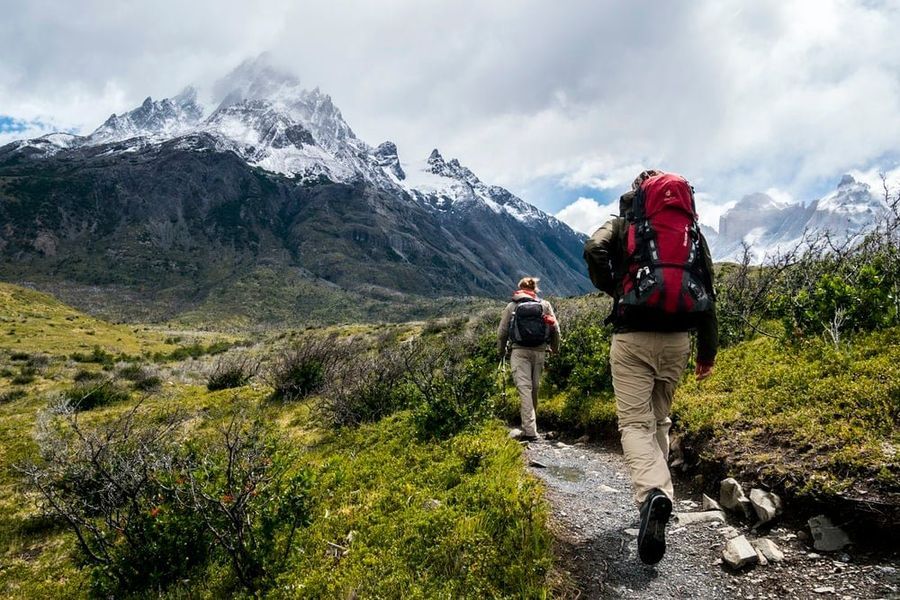
Of course, trekking couldn't be left out of the top 10 mountain sports. The term derives from the English "to trek" and means to take a long journey or walk slowly. This explanation already suggests that trekking is typically undertaken on long itineraries, generally lasting two days or more, with overnight stays in equipped areas, refuges, or tents. When trekking, one seeks a slow journey to fully immerse oneself in nature and return to the rhythms that only walking can provide.
BACKPACKS FOR THIS ACTIVITY: since we will have to be partially or totally autonomous for several days we will have a lot of equipment with us, and depending on the duration of the trek and the season the backpack will range from 30 to 80 liters and will be well structured.
Trail Running
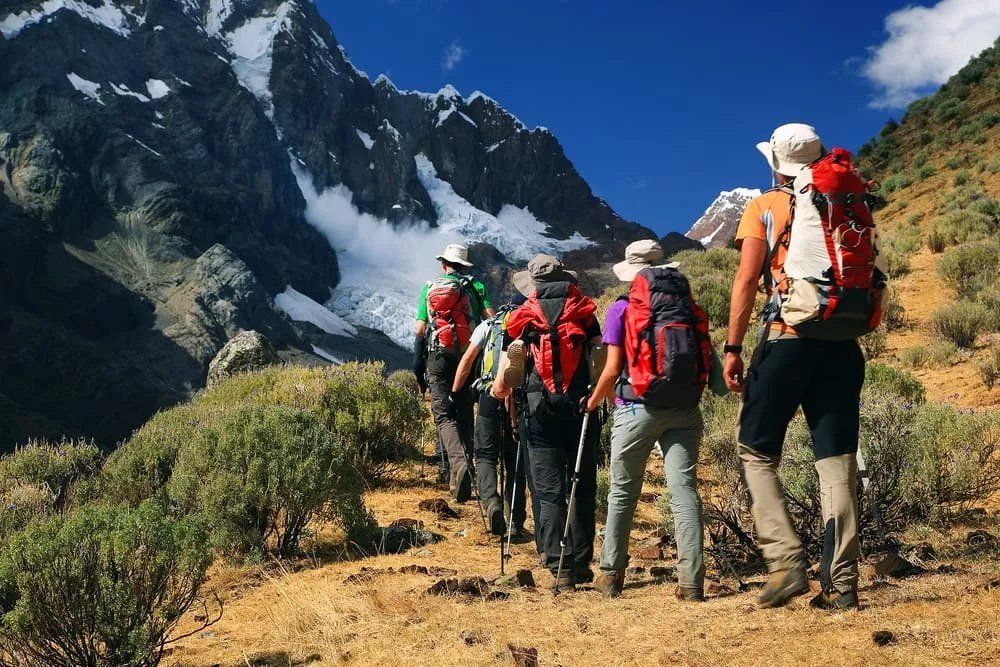
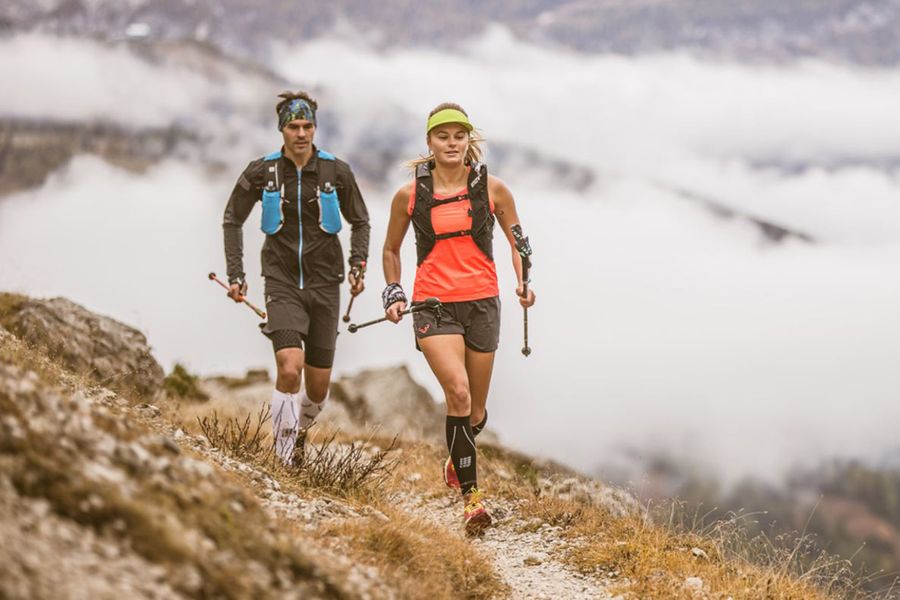
Trail running is a type of running practiced in natural environments. In truth, it isn't necessarily done in hills or mountains, but also in deserts, woods, or plains. What distinguishes it from traditional running is that only 20% of the route can be covered on asphalt or paved surfaces. Generally, these are long distances with significant elevation changes, and for this type of running, runners can also use poles.
There are several variations of this discipline: Trail (under 42 km and elevation gain around 3,000 m), Ultra Trail (between 42 and over 100 km and elevation gain of 4,000 m), Endurance Trail (about 320 km and 10,000 m of elevation gain), and Skyrunning (short distances but with very technical and significant elevation gain). BACKPACKS FOR THIS ACTIVITY: These are very basic backpacks in which the runner carries mainly water, energy bars, and a few light items of clothing.
Climbing
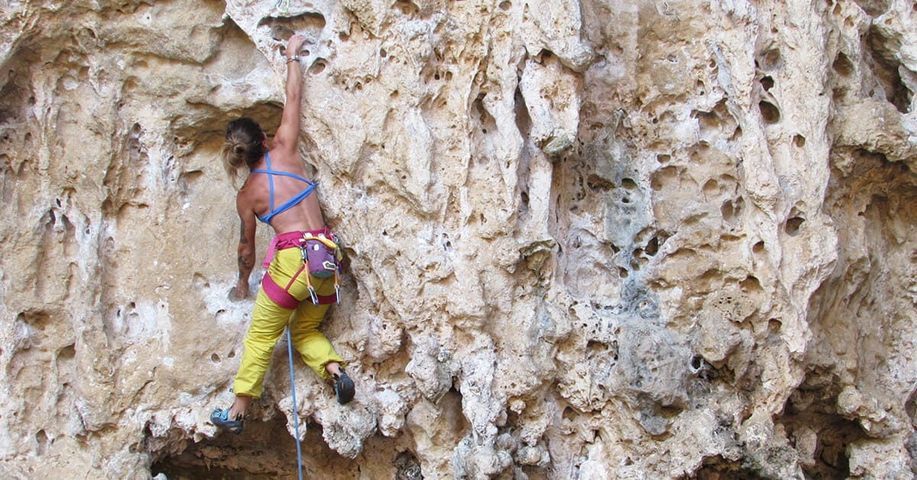
Rock climbing is generally practiced on rock faces without previously equipped sections. Obviously, we're talking about climbing in natural environments, not on artificial walls or indoor structures. It's a very difficult sport and requires extensive training and specific technical knowledge, given the high level of risk. Climbing is classified as free climbing, when we don't use ropes, carabiners, or other equipment, and aid climbing, when we do use such equipment. A further distinction is made between solo climbing and climbing with a roped party, if done by multiple people.
BACKPACKS FOR THIS ACTIVITY: For climbing, mountaineering backpacks are used, narrow and with few pockets, in which the helmet, ropes and carabiners are stored.
Mountain bike
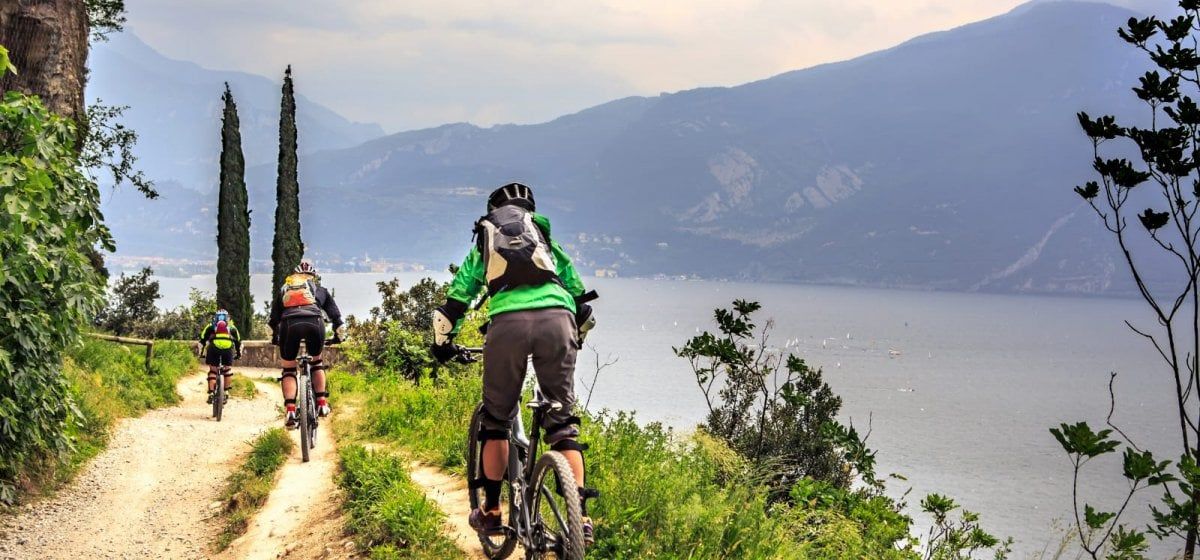
MTB, or Mountain Trials Bike, is cycling on unpaved trails and paths in natural environments. The bikes are naturally designed to handle elevation changes and rough terrain, and are equipped with shock absorbers, larger knobby wheels, disc brakes, and durable frames. There are, of course, countless disciplines and variations of this sport, which in recent years has also seen the advent of electric motors to assist pedaling.
Many mountain areas now have dedicated mountain bike trails, where enthusiasts can explore the surrounding landscape while enjoying the ride to the fullest.
BACKPACKS FOR THIS ACTIVITY: There are backpacks specifically designed for mountain biking, but hiking backpacks are also perfectly fine.
Mountaineering
Mountaineering is perhaps the toughest mountain sport. The term itself was coined when the first pioneers attempted to conquer the highest peaks in the Alps. Mountaineering involves scaling the highest peaks, overcoming rock, snow, or ice during the ascent, in areas where there are no trails but, where available, via ferratas. To undertake this activity, one relies on expert guides and must be well-prepared, both technically and physically. There's much to say about mountaineering and its history. Perhaps we'll explore it in more detail in a future article...
BACKPACKS FOR THIS ACTIVITY: the features are the same as those we've seen for climbing, perhaps with different load capacities and pockets.
Rafting
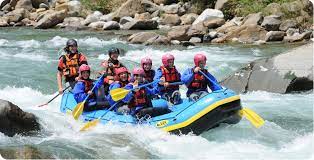
Rafting involves navigating rivers, from fast-flowing to calm, in a rubber dinghy called a raft, which is steered by crew members with paddles to navigate rapids and rocks. This sport requires wearing a helmet and life jacket in case of capsizing or impact with rocks.
If you'd like to try this sport, we recommend hiring a sports club, which will rent you the necessary equipment and take you on easy trails to learn this discipline.
Sci
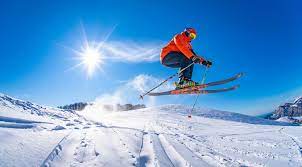
The mother discipline of winter mountain sports. Skiing has now spread to the vast majority of mountain areas around the world, where state-of-the-art ski lifts have attracted millions of practitioners to the sport. For those unfamiliar with it, skiing involves traversing snowy terrain with equipment—skis and snowshoes—in various ways. There are various disciplines, such as alpine skiing, Nordic skiing, ski mountaineering, freeride skiing, and freestyle skiing. The world of skiing is truly vast and impossible to cover in its entirety here.
BACKPACKS FOR THIS ACTIVITY: Backpacks aren't commonly used for skiing, but there are models specifically designed for this sport. These are generally smaller backpacks.
Snowboard
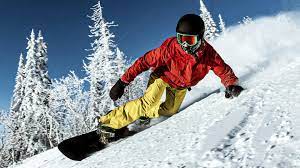
Skiing's younger sibling, snowboarding was born in the 1960s in the United States. Unlike skiing, snowboarding is suited to those who prefer performing tricks rather than riding down the slopes, but even here, there are various disciplines that favor one or the other. Alpine snowboarding, in fact, features disciplines similar to skiing, while freestyle snowboarding is characterized by individual or combined aerial acrobatics.
The areas of ski resorts dedicated to snowboarding are snowparks, where snowboarders can train on dedicated facilities.
BACKPACKS FOR THIS ACTIVITY: In this discipline, the backpack is a very fashionable accessory, and various companies in the sector create backpacks dedicated to this sport.
Ciaspole
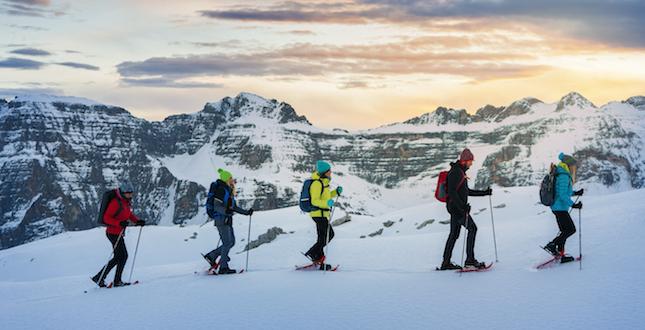
The last mountain sport we'll mention is snowshoeing. Snowshoes themselves are simply tools that allow us to hike in snowy environments because they're tied to our boots and allow us to float on the snow. In fact, over the past few years, actual trails have emerged that allow us to explore mountain landscapes with these tools, and from this, terms like "ciaspolare" and "ciaspolata" have emerged, which refer to this specific activity.
Over the years, snowshoes have evolved considerably and today they are technologically advanced tools that allow you to tackle even icy and steep terrain.
BACKPACKS FOR THIS ACTIVITY: In reality, the specific backpack for this activity is the one related to hiking or trekking, because it depends on how long we will be out on our excursion.